
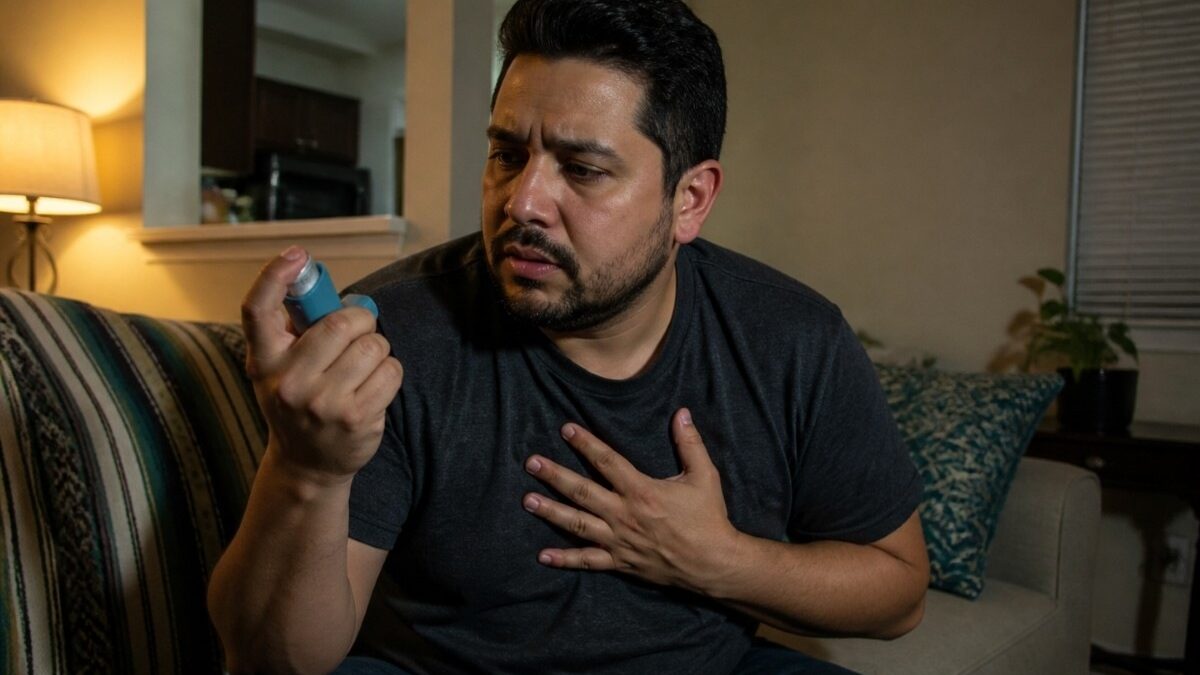
An asthma attack is a sudden tightening of the muscles around your airways, along with swelling and extra mucus inside them. Air has a harder time moving in and out, which causes wheezing, coughing, and chest tightness. Most flare-ups respond to a rescue inhaler within minutes. A severe attack does not, and that is the point where home treatment has failed and emergency care is needed. Here is how to recognize that moment and what treatment at Life Savers ER involves.
Rescue inhaler not working: What does this mean?
Your rescue inhaler, which usually contains albuterol, relaxes the airway muscles quickly. During a typical flare-up, two to four puffs bring noticeable relief within 15 to 20 minutes, and that relief lasts several hours. In a severe attack, the airways are so swollen and clogged with mucus that the medicine cannot reach far enough into your airways to help. You may feel a little better for a few minutes and then get worse again, or feel no change at all.
Needing your inhaler more often than every four hours, or using it repeatedly without lasting relief, is one of the clearest signs that the attack is beyond what the inhaler can handle. Do not keep waiting to see if the next dose works; each round without relief means the airways are closing further.
Signs of a severe asthma attack
The most reliable warning sign is trouble speaking. If you can only get out a few words before needing a breath, or cannot finish a short sentence, the attack is severe. Other signs that emergency care is needed right now include:
- Lips, fingertips, or nail beds turning blue or gray
- Skin pulling in between the ribs or at the base of the neck with each breath
- Breathing so fast and hard that you cannot lie down or walk across a room
- Confusion, drowsiness, or feeling like you might pass out
One sign that fools people is silence. Wheezing that suddenly stops while breathing is still hard does not mean the attack is over. It can mean so little air is moving that there is not enough airflow to make a sound. That is one of the most dangerous stages of an attack and a sign that you need care immediately.
Chest infection and asthma: when to go to the hospital
Colds, flu, bronchitis, and other chest infections are the most common triggers of serious asthma attacks. The infection inflames airways that are already sensitive, and the extra mucus makes the narrowing worse. If you have asthma and a chest infection, and your symptoms are getting worse instead of better, your rescue inhaler is wearing off quickly, or you develop a fever with increasing shortness of breath, it is time to be seen. Children with asthma can go downhill quickly during a respiratory infection, so a lower threshold for coming in is wise.
How the ER treats an asthma attack that won’t stop
At Life Savers ER, you will be seen right away, without waiting. Checking your oxygen level, listening to your lungs, and starting treatment all happen at once. Treatment for a severe attack typically includes:
- Nebulized breathing treatments, which deliver a continuous mist of airway-opening medicine far more effectively than a handheld inhaler can during a bad attack
- Oral or intravenous steroids to reduce airway swelling, which usually take a few hours to start working but shorten the attack and lower the chance of it returning
- Oxygen if your levels are low
If the attack is not easing, additional medications given by IV or through the nebulizer can relax the airways further. A chest X-ray can rule out pneumonia or a collapsed lung, and labs can check for infection. Because imaging and labs are done in the building, there is no delay in finding out whether something besides asthma is contributing.
Most patients improve over one to several hours. Before you go home, the team will make sure you can breathe comfortably at rest and that your oxygen is holding steady. You will usually leave with a short course of steroid pills and a plan for follow-up with your regular doctor. Patients who are not improving after full treatment may need to be admitted, and the team will arrange a transfer if that becomes necessary.
Don’t wait out a bad attack at home
Asthma attacks can turn dangerous quickly, and people who come in early are those who do the best. If your inhaler is not working, you cannot speak in full sentences, or your lips are changing color, come straight to Life Savers ER or check in online on the way. Our Houston and Sugar Land locations are open 24 hours a day with no wait, and the breathing treatments, steroids, and imaging you need are all under one roof.